
If you have ADHD, or think you might, you have probably heard it: these days everyone seems to have it. The remark can make you doubt your own diagnosis, or wonder whether you deserve your place in the assessment queue.
On October 9, a review commissioned by the UK government published its final report on exactly that question, for England. The headlines said ADHD is at risk of being overdiagnosed. The 600 pages underneath say something more useful.
Recorded diagnoses rose far faster than ADHD itself
The review, led by psychologist Peter Fonagy, separates two numbers that usually get mixed up: how many people have ADHD, and how many have it written in their medical record.
The second number has exploded. In family doctor records, ADHD among 12 to 17 year olds went from 0.26 percent in 2000 to 3.88 percent in 2025, more than 15 times higher.
The first number barely moved, as far as anyone has measured. The last national survey that actually assessed children, in 2017, put ADHD at about 3 percent of 5 to 15 year olds, and no equivalent exists for adults. England is arguing about ADHD numbers without a current count.
The review could not conclude that ADHD is overdiagnosed
Here is the sentence the headlines skipped. On the evidence available, the authors write, "we cannot conclude that overdiagnosis is occurring at scale".
They do not wave the worry away either. Among boys aged 12 to 17, recorded ADHD is now around 5 percent, at or above the older estimates, and still climbing. The review's reading is that the balance of risk is shifting, from missing people toward mislabeling some of them.
The risk of a wrong label is highest, it says, when an assessment is brief, remote, or looks for only one condition. More than half of England's publicly funded ADHD assessments are now done by independent providers with no consistent quality checks, and the government said the same day that all ADHD assessments will come under the health care regulator.
The struggles did not get milder
If awareness were mostly pulling in people with mild, ordinary difficulties, the average person coming forward would be coping better than before. The review looked for that. It did not find it.
In England's 2024 national survey, adults whose answers on a short ADHD questionnaire pointed to ADHD were several times more likely to report trouble with paperwork, money and relationships. The review found those gaps have not narrowed over time.
What did change is how many people recognize themselves. The share of adults who believe they have ADHD rose about eightfold between 2014 and 2024, to 5.8 percent, while 1.8 percent reported a professional diagnosis. The review does not treat that as a count of ADHD, and it does not dismiss it either: people, it says, are seeking answers for very real problems.
The rise in adult difficulties sits almost entirely on one side. Restlessness and impulsivity stayed flat. What grew was inattention: organizing, finishing, remembering appointments. A questionnaire is not a diagnosis, though, and anxiety, depression and poor sleep rose over the same years. Each of them can make it hard to concentrate.
Help should not wait for the label
By the end of 2025, more than 560,000 people in England were waiting on an ADHD referral, 17 times the 2019 figure. Waiting does damage of its own: in a national patient survey, 42 percent said they got worse while waiting, rising to 71 percent of those who waited more than six months. Only about one in five people invited took part, so treat those shares as rough.
So the review's main recommendation is not about counting diagnoses. It wants support to be there before, during and after an assessment: clear information about ADHD, practical and peer support, and adjustments at school or work while people wait. Diagnosis stays. It just stops being the only door.
It also points out something many people do not know. Under Britain's Equality Act, an employer's duty to make reasonable adjustments depends on how much a difficulty affects you, not on a diagnosis.
None of this is in force yet. These are recommendations for England, and the government has promised its full answer in the coming months. If you are on a waiting list, stay on it: support in the meantime is meant to be a bridge to an assessment, not a replacement.
How to make a task small enough to start in Recordo
The difficulties the review found rising are the everyday ones: starting a task that needs effort, keeping it organized, getting it finished. That is the kind of practical help Recordo is built for, and you can use it today.
Shrink the task until starting is easy: not "do taxes" but "open the folder". On the Home screen, tap Coach me on your next task to open Momentum Mode. It has three tabs: Plan, a short checklist for this one task; Coach, where you can tap Break this down or Help me start; and Timer.
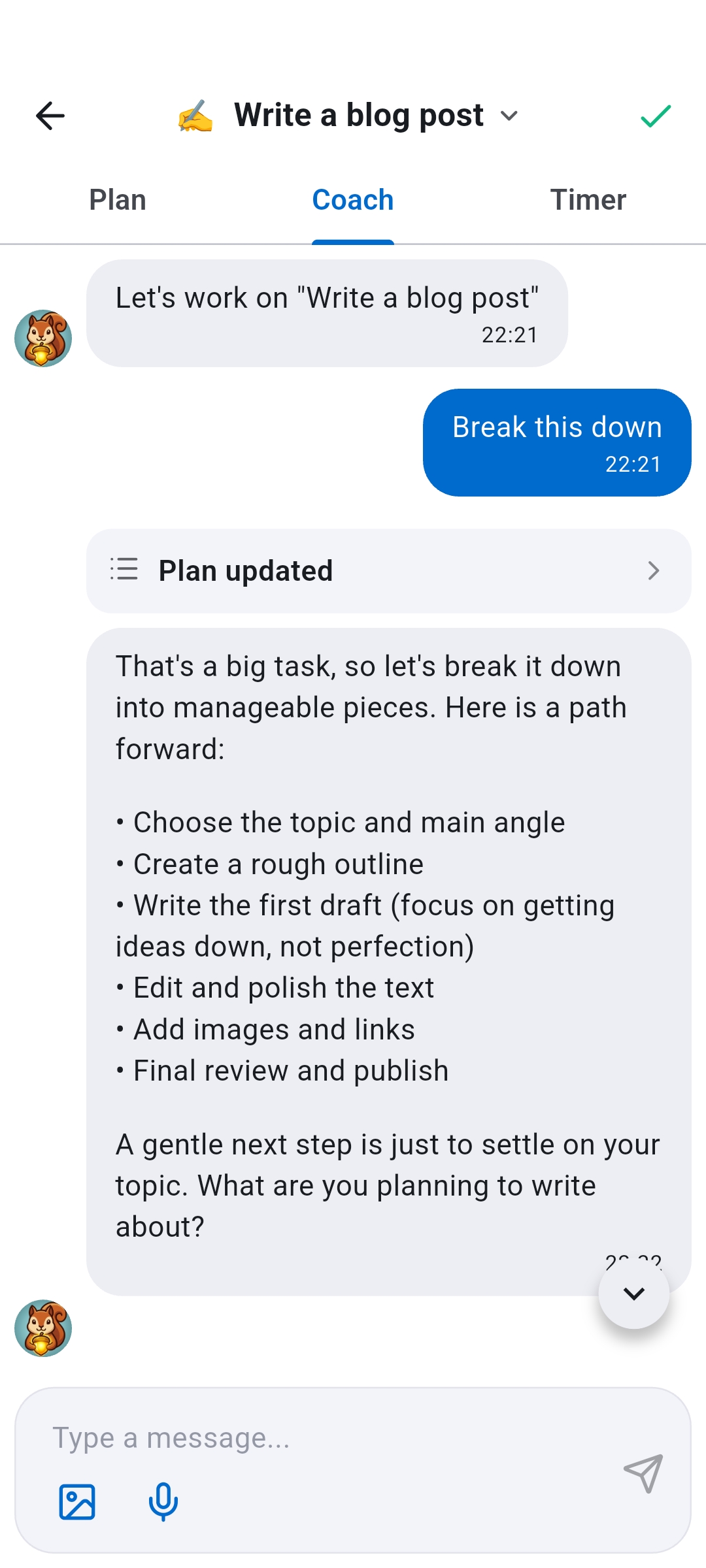
There is more on that first step in ADHD Task Paralysis: How to Find the First Step. Our previous ADHD news story looked at ADHD going unnoticed inside eating disorder care.
Your difficulties are real before anyone names them
A diagnosis can explain twenty years of your life and open the door to treatment. But the difficulty is real before a clinician names it.
So the next time someone tells you that everyone seems to have ADHD these days, you have a better answer than yes or no. England checked. The records changed enormously, the struggles did not shrink, and help that waits years for a label arrives too late.
Sources
- Fonagy P (chair), Baird G, Wessely S (vice-chairs). Independent review into mental health conditions, ADHD and autism: final report. Department of Health and Social Care, published October 9, 2026.
- Executive summary of the final report. GOV.UK, October 9, 2026.
- Minister McGovern speech on mental health, ADHD and autism. GOV.UK, October 9, 2026.
Discussion
Loading the conversation…
Open the discussion in the Recordo community