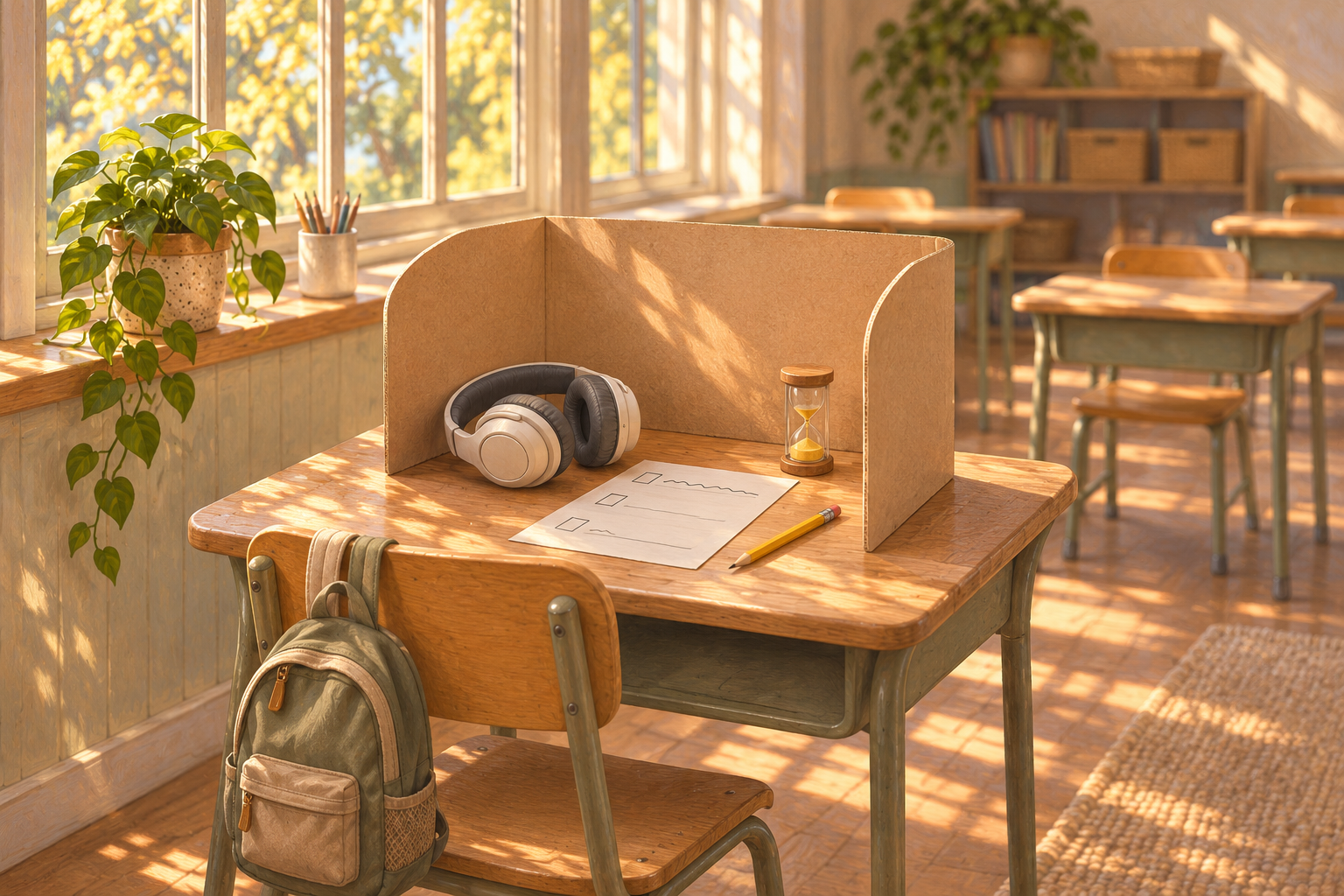
Extra time on tests. A break every few minutes. Headphones and a divider to block out the room. These are among the most common supports written into US school plans for children with ADHD.
A trial published this month tested all four on the same children, and none of them helped.
Every child tried every option
Researchers at Florida International University ran the study in the classrooms of their summer program for children with ADHD, over four summers from 2022 to 2025. 255 children from kindergarten to sixth grade took part, and 235 finished.
The design is what makes it hard to wave away. Each day, a child got one accommodation or none: 50% more time, a one-minute break every five minutes, permission to stand at the desk, or a quiet workspace with noise-canceling headphones and a three-sided divider. Every child cycled through all of them, so each child was compared with themselves.
None of the four made a difference
No accommodation reduced rule-breaking in class, and none raised quiz scores. Extra time and the quiet workspace even made children slightly slower at their work.
"We were surprised that none of the accommodations we tested had a significant effect," said lead author Gregory Fabiano. His explanation is the part worth keeping: "These approaches fail to build skills or address motivation." More time does not help if the problem was never time.
What did help: clear rules, fast feedback and medicine
The same trial tested two other things, and both worked. Without either, children broke about six classroom rules an hour. With an enhanced behavior program and stimulant medication together, it was just over one. Each helped on its own, medication more than the behavior program, and medication also raised the amount of work done correctly.
The behavior program is built on a daily report card, and it is simpler than it sounds. A teacher and parent pick three goals for one child, for example "starts work within a minute", "raises a hand before speaking" and "finishes the math sheet". The teacher ticks each one during the day, the card goes home, and a good day earns something small at home, like choosing dinner.
One summer program is not a school year
A summer program is not a regular school. Accommodations changed every day here, while a real 504 plan runs for months, and some children barely used the breaks or the standing desk they were offered. Fabiano says the findings need to be repeated in ordinary schools. He also earns royalties from a book on the daily report card method the study tested, which the paper discloses.
Still, accommodations this common have rarely been tested this carefully, and here they came out flat.
A sharper question for school plans
One study is not a reason to strip accommodations out of a plan. Some children may still need a specific one, and the authors are now looking at which ones help which children.
What it does offer parents and teachers is a sharper question: what in this plan builds a skill, and what only removes pressure? Extra time on a test removes pressure; practicing starting a worksheet within a minute, with a tick each time, builds a skill. A break every five minutes removes pressure; stretching to ten minutes of work before a break builds one. Headphones block out the room; learning to raise a hand instead of calling out is a skill.
Fabiano's own advice is to put more weight on clear expectations, steady feedback, and praise or rewards for each child's own goals. A daily report card costs a school almost nothing.
A report card for grown-ups
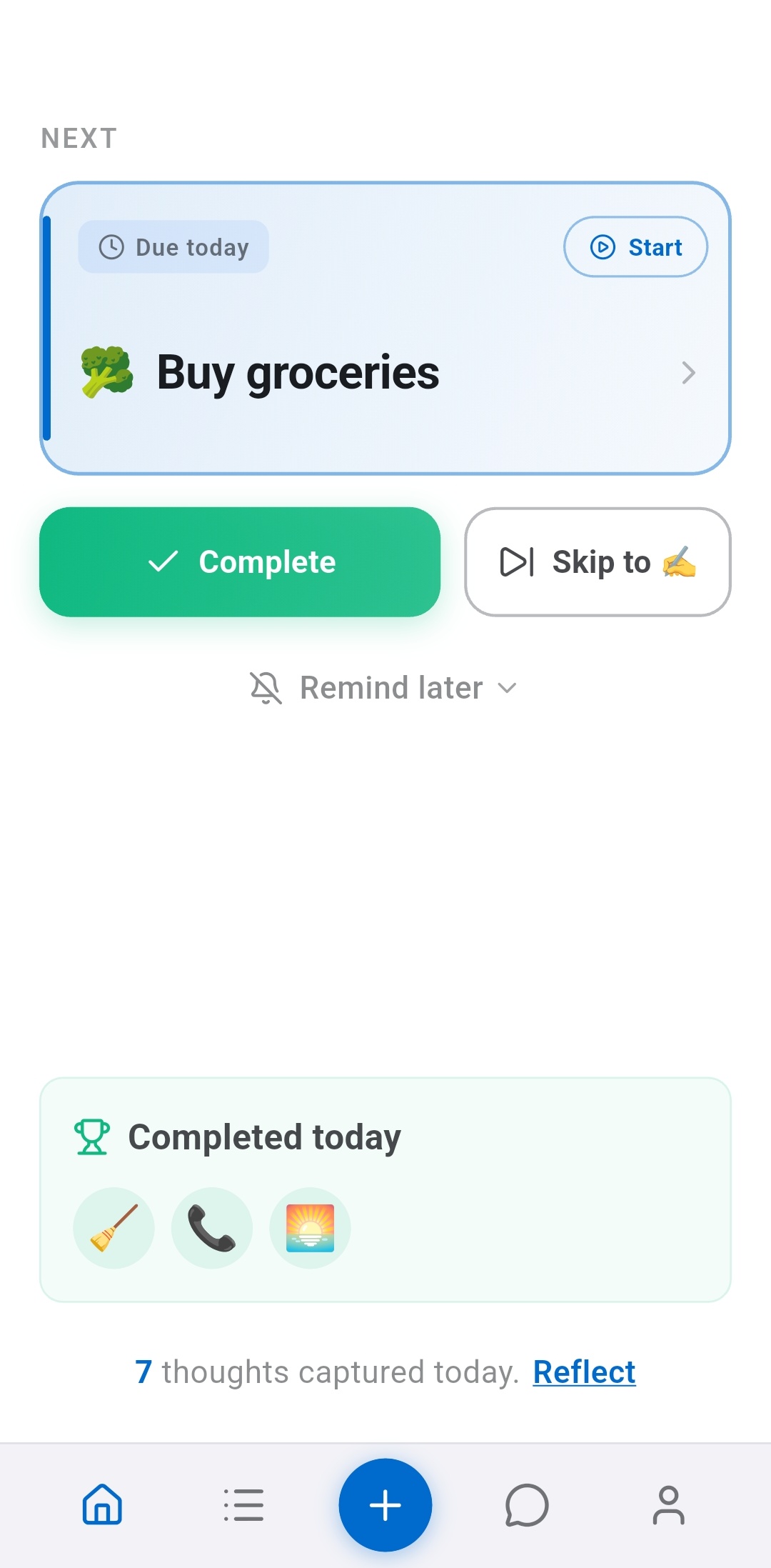
Adults rarely get a daily report card, but the idea travels: a few clear goals, and a tick the moment one is done. Recordo's Home works that way. It shows one next task instead of the whole list, and finishing it gets a small celebration on the spot, so the feedback comes right away instead of at the end of the week.
Sources
- Fabiano GA, et al. Attention-Deficit/Hyperactivity Disorder Accommodations, Behavior Therapy, and Stimulant Medication: A Randomized Clinical Trial. JAMA Pediatrics, published online November 13, 2026. doi:10.1001/jamapediatrics.2026.5973.
- Florida International University. Common ADHD classroom accommodations don't improve student performance. News release, November 13, 2026.
- Dolan EW. Common classroom accommodations for ADHD fail to improve student behavior or schoolwork in clinical trial. PsyPost, November 19, 2026.
Discussion
Loading the conversation…
Open the discussion in the Recordo community